How to Register a Salvage Car in Dubai: The 2026 Step-by-Step Guide
What if the 'total loss' label on your dream car isn't a dead end, but actually a 40% discount on your next luxury SUV? You've likely heard horror stories about vehicles failing RTA inspections forever or getting stuck in a loop of hidden fees. It's frustrating when you find a high-value deal at auction but feel paralyzed by the complex paperwork. This guide simplifies exactly how to register a salvage car in the UAE by breaking down the RTA's 2026 safety standards into manageable steps.
We'll walk through the AED 150 technical inspection, the transition to road-legal status, and how to secure insurance for repaired vehicles. You'll learn to navigate the digital registration process and handle the AED 420 registration fee without surprises. By the end, you'll have a clear roadmap to turning an auction find into a fully registered car with fresh UAE plates.
Key Takeaways
- Identify the vital difference between "Scrap" and "Salvage" titles to ensure your vehicle is legally eligible for repair and registration in the UAE.
- Follow our definitive guide on how to register a salvage car in Dubai, covering everything from professional damage assessment to final RTA approval.
- Prepare the necessary documentation, such as the VCC and Emirates ID, and budget for essential RTA costs like the AED 150 technical inspection fee.
- Learn the path to securing a valid Mulkiya and insurance coverage, allowing you to enjoy a road-legal vehicle at a fraction of its market value.
Understanding Salvage Titles and RTA Regulations in the UAE
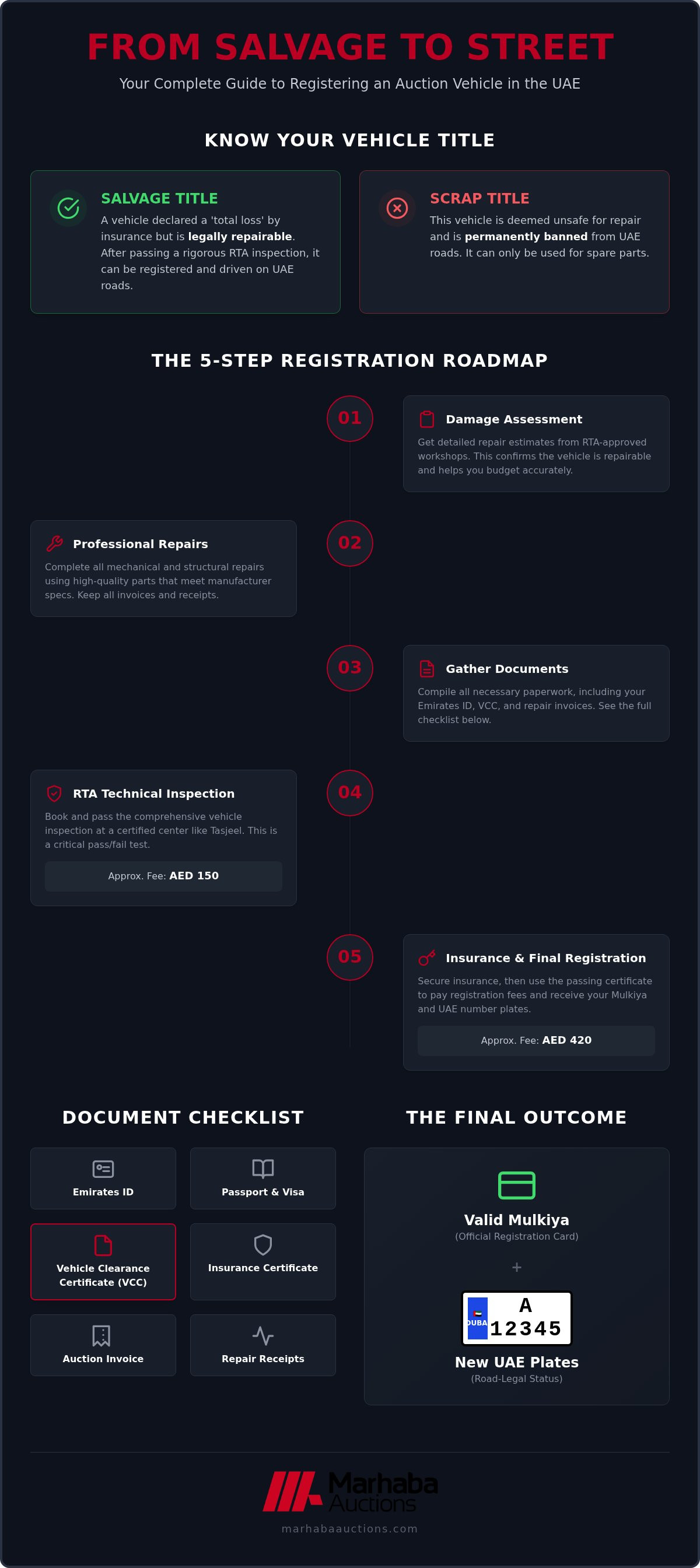
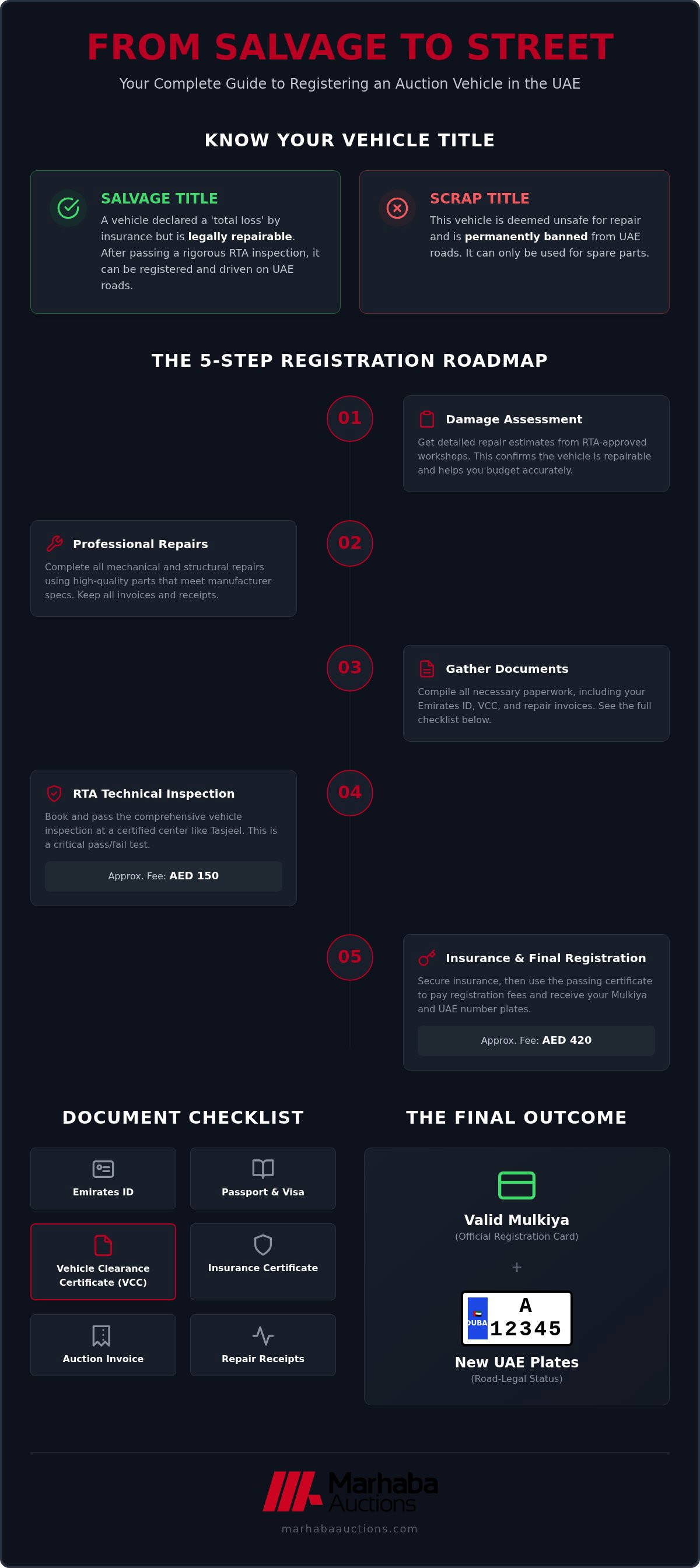
A salvage vehicle is a car that an insurance provider has declared a total loss because repair costs exceeded its market value, yet it remains technically repairable. This status differs significantly from a "Scrap" title, which permanently bans a vehicle from UAE roads. A salvage title is a vehicle status indicating previous significant damage that has been professionally remediated to meet RTA safety specs. Gaining a deep Understanding Salvage Titles is the first step in learning how to register a salvage car in Dubai.
The Roads and Transport Authority (RTA) serves as the gatekeeper for UAE road safety. They ensure that every vehicle, regardless of its history, meets strict structural and environmental standards. While some markets are vague about damaged cars, Dubai's regulations are transparent. If a car is marked as "Scrap," it's for parts only. If it's "Salvage," it can return to the road after passing a rigorous technical validation. This distinction is why buyers must verify the vehicle's status before bidding at a used car auction Dubai.
Legal Requirements for Salvage Vehicle Ownership
Every car purchased through an auction must come with a Vehicle Clearance Certificate (VCC). This document is the vehicle's "birth certificate" in the UAE system. It proves customs clearance and legal ownership, making it indispensable for the registration process. You can't start the RTA workflow without a valid VCC in your name or the auction house's name. Understanding the legal framework is crucial when planning how to register a salvage car in Dubai, as missing one document can stall your progress.
The RTA also closely monitors "Total Loss" records through a centralized database to ensure no unsafe vehicles return to the road. This system tracks insurance claims and previous damage reports. It prevents cars with severe fire or water damage from being registered. By maintaining these high standards, the RTA ensures that any repaired salvage vehicle is just as safe as a brand-new model on the highway.
The Step-by-Step Process to Register a Salvage Car in Dubai
Mastering how to register a salvage car in Dubai requires a methodical approach that prioritizes safety and documentation. Step 1 involves a professional damage assessment. You must secure detailed repair estimates from RTA-approved workshops to ensure your budget remains intact and the car is actually repairable. Step 2 focuses on the labor. Complete all necessary mechanical and structural repairs using high-quality parts that meet original manufacturer specifications. This phase is where you turn a repairable asset back into a safe, functional vehicle.
Navigating the Repair and Preparation Phase
Using certified workshops is vital for passing the structural integrity portion of the RTA test. These facilities understand the specific tolerances required for roadworthiness in the UAE. They also provide the necessary paperwork that proves the work was done correctly. Always keep every repair receipt and invoice. These documents form a transparent vehicle history that builds resale value and proves the quality of work to future buyers. If you are still looking for a project, you can find salvage cars for sale UAE that are ideal for restoration.
Once repairs are finished, gather your purchase documentation. You'll need the original auction invoice, the Vehicle Clearance Certificate (VCC), and your Emirates ID. Step 4 is booking the comprehensive RTA Technical Inspection at a center like Tasjeel. This is a rigorous pass or fail test costing approximately AED 150. Success here confirms your vehicle is roadworthy and is the final hurdle in learning how to register a salvage car in Dubai. Before you start your next build, browse available inventory to see what’s currently on the block.
Essential Documentation and RTA Technical Inspection
To finalize how to register a salvage car in Dubai, you must assemble a precise document folder. Your mandatory checklist includes your Emirates ID, passport with a valid residency visa, the Vehicle Clearance Certificate (VCC), and an insurance certificate. The VCC is the primary document proving a vehicle has cleared customs and is eligible for its first registration in the country. Without this paperwork, the RTA cannot link the vehicle to your traffic file or verify its legal entry into the UAE market.
Once your car successfully navigates the technical exam, the inspector issues a "Passing Certificate." This document is only issued after a vehicle meets all safety and environmental standards. It serves as the green light for the final administrative phase. You'll then visit an RTA service center or use their smart app to pay the necessary registration fees. After payment, the RTA issues your new number plates and the Mulkiya, which is your official registration card. This completes the transition from a salvage asset to a road-legal vehicle.
Finalizing Insurance and Road Eligibility
Securing insurance for a previously salvaged vehicle involves choosing between third-party and comprehensive options. Third-party coverage is standard, but some specialized providers offer comprehensive plans if you provide detailed repair invoices from certified workshops. If your vehicle fails the first inspection, the RTA provides a 30-day re-test rule. This window allows you to fix specific safety issues identified in the report without paying the full inspection fee again. Ready to find your next project? Browse our live auction calendar for inspected salvage vehicles. Mastering how to register a salvage car in Dubai ensures you can capitalize on auction deals with total confidence.
Start Your Journey to High-Value Car Ownership
Navigating the RTA process transforms a repairable auction find into a road-legal asset. You now understand the vital difference between scrap and salvage titles, alongside the specific documentation like the VCC needed for a successful Mulkiya. Learning how to register a salvage car in Dubai is the final piece of the puzzle for savvy buyers looking to save 30-40% below market prices. With transparent condition reports and daily live auctions in the UAE, the path to a high-quality vehicle is clearer than ever. Don't let the paperwork hold you back from an incredible deal. Take the first step toward your next project and register to bid on inspected salvage cars today. The road is waiting for your newly restored ride.
Frequently Asked Questions
Can I register a car that has been declared a total loss in the UAE?
Yes, you can register a vehicle declared a total loss as long as its legal status is "Salvage" rather than "Scrap." Once the car undergoes professional repairs at a certified workshop, it must pass a rigorous RTA technical inspection. This validation process ensures the vehicle is roadworthy and meets all UAE safety standards before a new Mulkiya is issued.
What is a VCC and why do I need it for a salvage car?
The Vehicle Clearance Certificate (VCC) is a mandatory document proving a vehicle has cleared UAE customs and is legally owned. It serves as the car's primary record before its first registration in the country. You need this certificate to link the vehicle to your traffic file, making it a critical requirement when learning how to register a salvage car in Dubai.
How much does the RTA technical inspection cost for a salvage vehicle?
The mandatory technical inspection for a salvage vehicle typically costs between AED 150 and AED 200. This fee covers the comprehensive safety and emissions check performed at RTA-authorized centers. If the vehicle fails the initial test, you have a 30-day window to complete the necessary repairs and return for a re-test to secure your passing certificate.
Can I get comprehensive insurance for a car with a salvage history?
Yes, it's possible to secure comprehensive insurance, though many providers initially offer third-party liability coverage for repaired salvage cars. To qualify for comprehensive plans, you'll usually need to provide detailed repair invoices and a valid RTA passing certificate. Some specialized insurers in the UAE offer full coverage once they verify the vehicle's structural integrity has been professionally restored.
Can I register a car that has been declared a total loss in the UAE?
Yes, you can register a vehicle declared a total loss as long as its legal status is "Salvage" rather than "Scrap." Once the car undergoes professional repairs at a certified workshop, it must pass a rigorous RTA technical inspection. This validation process ensures the vehicle is roadworthy and meets all UAE safety standards before a new Mulkiya is issued.
What is a VCC and why do I need it for a salvage car?
The Vehicle Clearance Certificate (VCC) is a mandatory document proving a vehicle has cleared UAE customs and is legally owned. It serves as the car's primary record before its first registration in the country. You need this certificate to link the vehicle to your traffic file, making it a critical requirement when learning how to register a salvage car in Dubai.
How much does the RTA technical inspection cost for a salvage vehicle?
The mandatory technical inspection for a salvage vehicle typically costs between AED 150 and AED 200. This fee covers the comprehensive safety and emissions check performed at RTA-authorized centers. If the vehicle fails the initial test, you have a 30-day window to complete the necessary repairs and return for a re-test to secure your passing certificate.
Can I get comprehensive insurance for a car with a salvage history?
Yes, it's possible to secure comprehensive insurance, though many providers initially offer third-party liability coverage for repaired salvage cars. To qualify for comprehensive plans, you'll usually need to provide detailed repair invoices and a valid RTA passing certificate. Some specialized insurers in the UAE offer full coverage once they verify the vehicle's structural integrity has been professionally restored.