Salvage Title Cars in the UAE: The Complete Reference Guide (2026)
Could a car labeled as salvage actually be your smartest financial move in the Emirates? Many buyers assume that salvage title cars UAE are always destined for the scrap heap. In a market where high labor costs or specialized parts for luxury SUVs can trigger an insurance write-off, salvage is often just a financial designation rather than a death sentence for the chassis. You want the massive savings, but you're likely worried about hidden mechanical failures or failing your RTA registration.
We understand that the line between a total loss and a hidden gem feels thin. That’s why we’ve built this framework to help you evaluate these vehicles with confidence. You'll learn how to distinguish minor cosmetic repairs from structural deal-breakers and how to follow the RTA inspection process without the headache. We'll cover everything from the AED 150 technical inspection fees to the specific documentation you need to prove roadworthiness. From understanding legal statuses to mastering the path to road-legality, this guide ensures your next auction win is a safe, street-legal reality.
Key Takeaways
- Distinguish between repairable salvage titles and non-roadworthy total loss vehicles to protect your investment and ensure legal compliance.
- Unlock significant savings by purchasing salvage title cars UAE at 30–40% below the typical market price for similar pre-owned models.
- Identify "Smart Salvage" deals by focusing on cosmetic or bolt-on repairs that don't compromise the vehicle's core structural integrity.
- Navigate the path to legality with a clear understanding of the RTA technical inspection process and mandatory registration requirements.
- Learn how to leverage certified UAE workshops to ensure your vehicle meets all safety standards for immediate road use.
Defining Salvage Title Cars within the UAE Regulatory Framework
In the Emirates, a salvage title isn't a final verdict. It's a financial label. When repair costs approach a specific percentage of a vehicle's insured value, insurance companies often choose to write it off. However, Defining Salvage Title Cars properly means recognizing they are still repairable assets. You shouldn't confuse them with "total loss" vehicles. In the UAE, a total loss designation often means the car is destined for the scrap yard. A salvage car, by contrast, is a vehicle that can return to the road once it passes the mandatory safety checks.
Common reasons for these titles include minor collisions, surface-level flood damage, or recovered thefts where the insurer has already settled the claim. The Vehicle Clearance Certificate (VCC) plays a vital role here. It acts as the car's primary document in the national auction ecosystem, ensuring that every transfer of salvage title cars UAE is recorded and transparent. This documentation is essential for anyone looking to browse available auction inventory with confidence.
The Legal Status of Salvage Vehicles
The Roads and Transport Authority (RTA) allows the sale of salvage vehicles through authorized platforms. While the title carries a history, it doesn't prevent future road-legality. Transparency is the standard; a salvage history will appear in technical reports, which naturally impacts resale value. For many buyers, the lower entry price justifies the lower eventual selling price. Under RTA compliance, a salvage title denotes a vehicle deemed a financial loss by an insurer that remains eligible for re-registration following a successful technical roadworthiness inspection.
Sources of Salvage Inventory
Where does this inventory come from? Most vehicles originate from local insurance write-offs, often featuring cosmetic or bolt-on damage that's easy to fix. You'll also find bank repossessions where minor damage was never repaired by the previous owner. It's important to note that while the UAE is a global hub, current regulations generally prohibit the import of salvage-titled vehicles from abroad for the purpose of registration. Most salvage title cars UAE buyers find in local auctions are GCC-spec vehicles originally sold within the Emirates, ensuring they meet regional cooling and filtration standards.
Evaluating Risks and Rewards of Salvage Title Vehicles
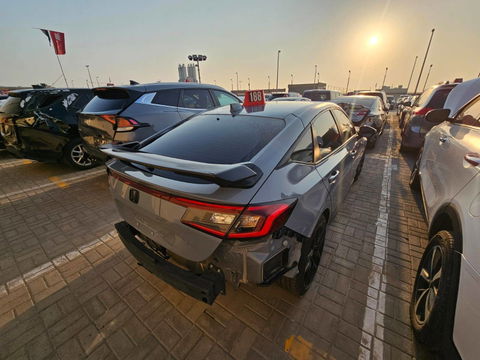
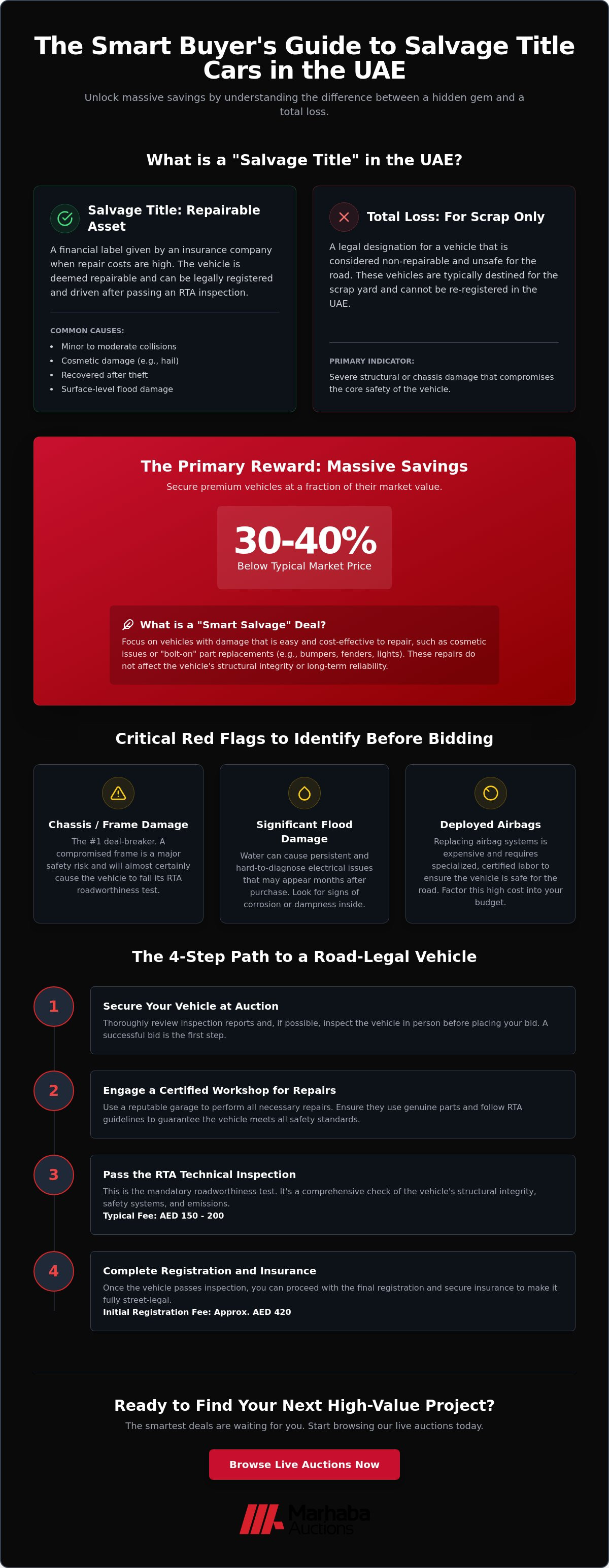
The primary draw for salvage title cars UAE is the math. You can often secure a premium SUV or luxury sedan at 30% to 40% below the standard market price for a clean-titled equivalent. This price gap provides a significant buffer for repair costs while still leaving you with a high-value asset. To maximize this reward, focus on "Smart Salvage." This means targeting vehicles with cosmetic damage or "bolt-on" part replacements, such as bumpers, fenders, or lighting clusters. These components are easily swapped without affecting the vehicle's long-term reliability or safety.
Profitability requires a full view of the hidden costs. Beyond the auction hammer price, you must budget for genuine parts and skilled labor. You'll also face fixed regulatory costs, including the RTA technical inspection fee (usually AED 150 to AED 200) and the initial registration fee of approximately AED 420. If a project car feels too complex, comparing these requirements against The Ultimate Guide to Pre-Inspected Used Cars will help you determine which path offers the best value for your specific budget.
Critical Red Flags to Identify
Chassis and frame damage are the most significant deal-breakers. The RTA maintains strict safety standards; a car with a compromised structure will likely fail its roadworthiness test regardless of how good the paint looks. Flood damage is another high-risk area. Water can cause lingering electrical issues that don't appear until months after the sale. Additionally, always check if the airbags have deployed. Resetting these safety systems in the UAE is expensive and requires specialized certification to ensure the car is truly safe for the road.
The Importance of Inspection Reports
Successful buyers never bid blindly. You must learn to read auction condition reports to spot hidden markers of severe damage. These documents provide a snapshot of the vehicle's state, but they shouldn't be your only tool. Leverage professional inspection services to examine salvage title cars UAE in person before the auction begins. This transparency ensures you know exactly what repairs are needed to reach road-legal status. Ready to see what's available? You can browse the upcoming auction calendar to find your next high-value project.
The Path to Roadworthiness: RTA Inspections and Registration
Turning your auction win into a street-legal vehicle is a methodical process. It starts with high-quality repairs. You must use a certified UAE workshop to ensure every component meets original manufacturer specifications. Cutting corners here is a mistake. The Roads and Transport Authority (RTA) prioritizes safety above all else, and your choice of technician determines whether your salvage title cars UAE investment pays off or stays in the garage.
Once repairs are complete, you'll move to the mandatory technical inspection, commonly known as the "Passing" test. This comprehensive evaluation ensures the vehicle is fit for public roads. After passing, you'll transition from the Vehicle Clearance Certificate (VCC) to a standard registration. Securing insurance is the final hurdle. While comprehensive coverage can be difficult to obtain for rebuilt salvage vehicles, third-party liability insurance is standard and satisfies the legal requirement for registration. You'll need a valid policy for at least 12 months to complete the process.
RTA Technical Inspection Requirements
The RTA inspection focuses on critical safety systems. Inspectors will scrutinize the chassis, braking performance, steering alignment, and all lighting systems. If your car fails, don't panic. You'll receive a report detailing the necessary fixes. You can then perform the specific repairs and return for a re-test. The technical inspection fee for a light vehicle typically ranges between AED 150 and AED 200 at authorized centers like Tasjeel or Shamil. To find your next project, check our auctions calendar for upcoming repairable inventory.
Final Registration and Ownership Transfer
Registration is the moment your project officially becomes road-legal. You'll need to present your Emirates ID, the original VCC, and your 12-month insurance certificate. The initial registration fee for a used light vehicle is approximately AED 420, with an additional AED 20 typically added for Knowledge and Innovation fees. If you're transferring ownership, expect a fee of AED 350. Once these steps are complete, you'll receive your new plates and Mulkiya. Ready to find your project car? Browse our live salvage inventory to see what's available today.
Secure Your Next High-Value Vehicle with Confidence
You now have the complete roadmap to turn a salvage title vehicle into a high-value asset on the streets of the Emirates. By focusing on "Smart Salvage" and adhering to the RTA technical inspection framework, you can bypass the inflated prices of the traditional used car market. Understanding that a salvage title is often a financial designation rather than a structural dead end allows you to capture 30-40% savings while maintaining full roadworthiness.
Finding the best salvage title cars UAE has to offer depends on transparency and access to the right data. We provide daily live auctions featuring high-volume inventory and detailed inspection reports for every vehicle to ensure you bid with total clarity. Don't let the fear of the unknown stop you from securing a premium car at a fraction of its market value. Register to bid on national salvage auctions today and start your journey toward a smarter automotive investment. The path to road-legality is clear, and your next project is waiting.
Frequently Asked Questions
Can I legally drive a salvage title car in the UAE?
Yes, you can legally drive a vehicle with a salvage history in the UAE once it's been fully repaired and passes the mandatory RTA technical inspection. This "Passing" test ensures the car meets all safety and environmental standards required for public roads. Once the RTA certifies the vehicle as roadworthy, it receives a standard registration and can be driven anywhere in the Emirates just like a clean-titled car.
How much can I save by buying a salvage car at auction?
Buyers typically save between 30% and 40% when purchasing salvage title cars UAE compared to the market price of clean-titled used models. These savings exist because insurance companies often write off vehicles based on high part costs or agency labor rates rather than actual irreparable damage. This price gap provides a substantial budget for high-quality repairs while keeping your total investment well below retail value.
Will the RTA register a car that had significant accident damage?
The RTA will register a car that had significant damage provided the repairs restore the vehicle to its original safety specifications. However, structural chassis damage is often a deal-breaker during the technical inspection. If the frame is compromised or safety systems like airbags aren't correctly reset, the vehicle will fail. It's essential to focus on vehicles where damage is primarily cosmetic or restricted to bolt-on parts.
Is it possible to get full insurance coverage for a salvage title vehicle?
Securing comprehensive insurance for a rebuilt salvage car is difficult in the UAE market, as most providers offer only third-party liability coverage. Insurers view these vehicles as higher risk due to their previous financial loss history. You'll need a valid insurance policy for at least 12 months to complete your RTA registration; therefore, most owners budget for third-party premiums from the start of the process.
What is the difference between a salvage title and a 'scrap' title?
A salvage title indicates the vehicle is financially written off but remains repairable and eligible for road use after a successful RTA inspection. In contrast, a "scrap" title is a permanent designation meaning the car cannot be registered or driven again. Scrap vehicles are sold strictly for parts or recycling. When browsing auctions, always verify the title status to ensure you aren't buying a vehicle legally barred from the road.
How do I check the history of a salvage car before bidding?
You can check a vehicle's history by reviewing the detailed condition reports provided on our auction platform and using the VIN to access government portals like the MOI or EVG websites. These portals show accident history and previous registration details. We also encourage physical inspections at our auction yards, allowing you to see the damage firsthand and estimate repair costs before you place your bid.
The Legal Status of Salvage Vehicles
The Roads and Transport Authority (RTA) treats these vehicles as "under repair" until they pass a specialized technical inspection. During the auction phase, the Vehicle Clearance Certificate (VCC) acts as the primary legal document. It proves the car has cleared customs and is eligible for ownership transfer. Under RTA compliance terminology, a salvage title is a temporary status for a vehicle declared a total loss by an insurer that remains eligible for roadworthiness restoration through certified repairs and comprehensive testing. This history stays on the car's record, ensuring transparency. You can check our used car auction Sharjah listings to see the latest inventory available under this status.
Sources of Salvage Inventory
Where do these cars come from? Most are insurance write-offs following minor accidents, flash flood damage, or recovered thefts where the owner was already compensated. Banks also contribute to the ecosystem through repossessed vehicles that might have sustained neglect or minor cosmetic damage. We see a significant influx of international imports, particularly from the US and Japan. It's vital to distinguish between GCC specs and non-GCC salvage. Imported non-GCC cars often offer higher features at lower prices. However, they must meet the 2026 Euro 6B emission standards to be registered locally. Browse our current used cars Dubai selection to compare these options and find your next project. The primary draw for salvage title cars UAE is the massive price gap. You're typically looking at prices 30% to 40% below the market value of a standard used car. This creates a high-margin opportunity for those who know how to spot "Smart Salvage." This strategy focuses on vehicles with cosmetic damage or bolt-on part replacements. If the repair only requires a new bumper, hood, or fender, you can restore the car to factory standards without complex structural work. Don't let the low sticker price blind you to the total investment. You must calculate the cost of genuine parts, skilled labor, and mandatory RTA fees. While a standard inspection is AED 170, salvage vehicles require a comprehensive check ranging from AED 250 to AED 350. Understanding these numbers is crucial for a profitable purchase. For a deeper look at why professional verification matters before you buy, read The Ultimate Guide to Pre-Inspected Used Cars.
Critical Red Flags to Identify
Some damage is simply too risky for the average buyer. Chassis and frame damage are often deal-breakers because they compromise structural integrity and safety. The RTA maintains strict UAE regulations on damaged vehicles that prevent severely compromised cars from returning to the road. Flood damage is another major risk. Water causes electrical gremlins that lie dormant for months. Additionally, check for deployed airbags. Resetting these safety systems in the UAE is expensive and requires specialized technicians.
The Importance of Inspection Reports
Transparency is your best tool when bidding. Every auction condition report contains markers that signal the car's history. Look specifically for notes on "structural" versus "non-structural" damage. We recommend leveraging professional inspection services before you place a live bid. These experts can estimate repair costs on the spot, helping you avoid overbidding. If you're ready to see these opportunities in person, you can browse used cars Sharjah or Dubai to inspect our current stock before the next auction begins. Transforming salvage title cars UAE into road-legal assets is a structured process that rewards patience and precision. It begins at a certified workshop. You must ensure all repairs meet factory safety standards because the RTA won't overlook structural compromises. Once the physical work is done, the vehicle enters the "Passing" phase. This is where the car is officially vetted for UAE road use through a rigorous technical evaluation. Securing insurance is the final hurdle before hitting the road. While comprehensive coverage is often difficult to obtain for rebuilt vehicles, third-party liability insurance is widely available. Most owners find this a fair trade-off for the massive initial savings. It's about balancing the lower purchase price with the long-term utility of a safe, inspected vehicle that meets all local safety protocols.
RTA Technical Inspection Requirements
The RTA technical inspection is comprehensive. Inspectors check everything from chassis alignment and suspension to brake performance and light functionality. For vehicles imported recently, compliance with Euro 6B emission standards is mandatory. If your vehicle fails, don't panic. You'll receive a detailed report of the necessary fixes. You typically have 30 days to complete repairs and return for a re-test, which costs between [VERIFY: AED 50 and AED 100]. To find vehicles with high restoration potential, check our auctions calendar for upcoming dates.
Final Registration and Ownership Transfer
Once you have your "Passing" certificate, the transition from a Vehicle Clearance Certificate (VCC) to a standard registration is straightforward. You'll need to present your Emirates ID, the original VCC, and your new insurance certificate at an RTA center. The standard registration fee for light vehicles is approximately [VERIFY: AED 420], and ownership transfers are around [VERIFY: AED 350]. These steps finalize your investment, turning a salvage project into a fully legal daily driver. Ready to find your project car? Browse our live salvage inventory and start bidding on your next vehicle today. The path to owning a premium vehicle at a fraction of the cost is now clear. You understand how to navigate the VCC process, identify smart salvage opportunities, and clear the RTA technical inspection with total confidence. By prioritizing transparency and following the established regulatory framework, you can turn a repairable vehicle into a safe, road-legal daily driver without the standard market markup. Marhaba Auctions is your partner in this journey. We provide the digital accessibility and full disclosure you need to succeed in the competitive market for salvage title cars UAE. Our platform features daily live auctions with a high-volume inventory, ensuring you always have access to the best models. Because we provide detailed inspection reports for every vehicle, you can bid with certainty and capture 30-40% savings compared to typical market prices. Don't let these financial opportunities pass you by. Register to bid on national salvage auctions today and join a community of smart buyers who know how to spot real value. We're ready to help you unlock the potential of your next vehicle.
Can I legally drive a salvage title car in the UAE?
You can drive a rebuilt vehicle once it passes the RTA Technical Inspection and receives a "Passing" certificate. Until these repairs are certified and the vehicle is fully registered, it must remain off-road. Passing this test proves the car meets all safety and environmental standards required for Emirates roads.
How much can I save by buying a salvage car at auction?
Buyers typically save between 30% and 40% compared to the market price of a standard used model. These savings depend on the extent of the damage and the current cost of replacement parts. Focusing on cosmetic repairs or bolt-on parts often yields the highest profit margins after restoration is complete.
Will the RTA register a car that had significant accident damage?
The RTA will register a car with prior accident damage as long as the chassis and safety systems are restored to factory specifications. If the damage is classified as "total loss" or "scrap" by the authorities, the vehicle is permanently barred from registration. Only repairable vehicles that pass the comprehensive technical test can return to the road for daily use.
Is it possible to get full insurance coverage for a salvage title vehicle?
Comprehensive insurance is rarely available for vehicles with a prior write-off history in the Emirates. Most local insurers offer third-party liability coverage for rebuilt cars instead. This covers damages to others in an accident but won't cover the repair costs for your own vehicle; factor this limitation into your budget.
What is the difference between a salvage title and a 'scrap' title?
A salvage title indicates a vehicle is damaged but repairable, while a scrap title means the car is legally "end-of-life." Scrap vehicles are intended for parts or recycling only. In the UAE, once a vehicle is issued a scrap certificate, it can never be registered for road use again.
How do I check the history of a salvage car before bidding?
You should check a car's history by using its VIN on platforms like Carfax for imported models or through local RTA history portals. Always review the detailed inspection reports provided by the auction house. These documents highlight specific damage areas and help you estimate repair costs before you place a live bid.