Salvage vs Repossessed Cars Dubai: Which Auction Deal is Right for You?
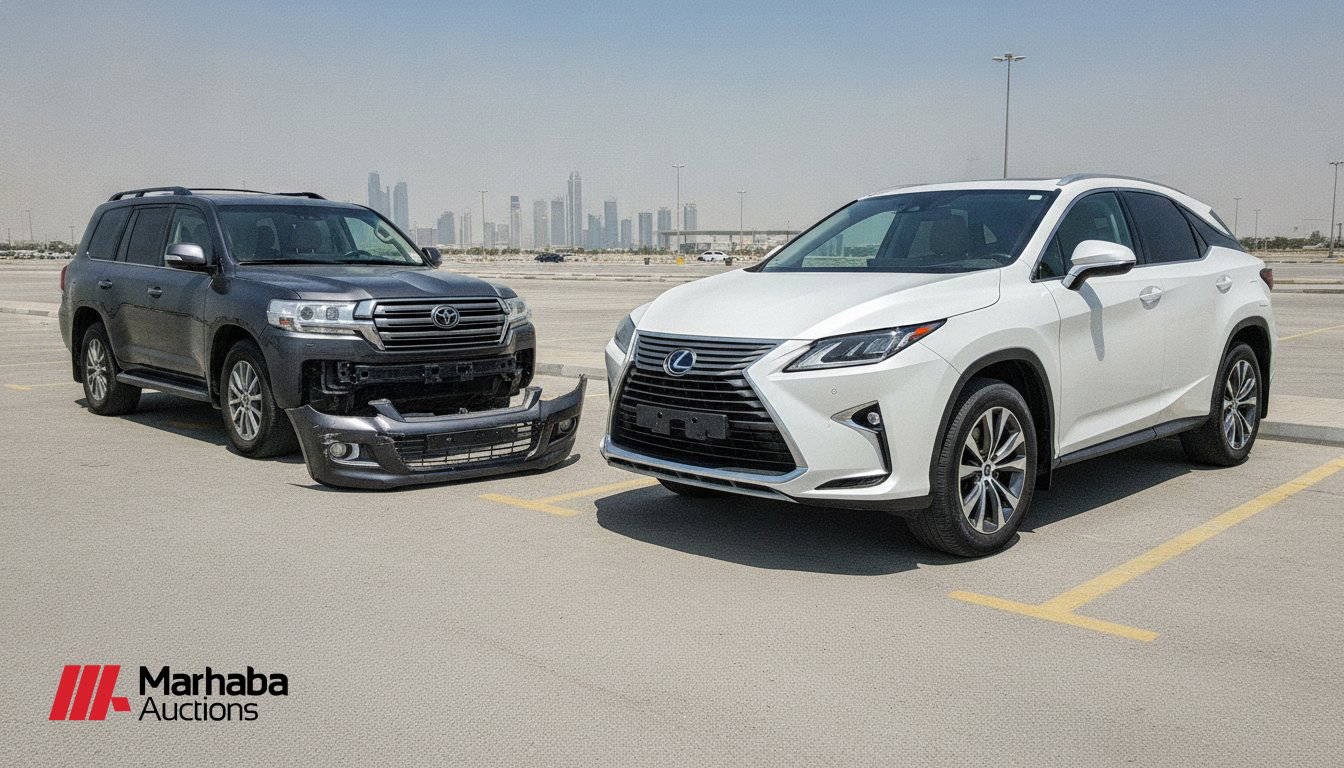
Why settle for a standard dealership markup when you can secure a late-model vehicle for 30% to 40% below market value? Most buyers in the UAE are searching for that perfect balance between a bargain price and a reliable engine. However, the choice between salvage vs repossessed cars Dubai auctions offer can feel like a gamble if you don't know the technical details. You likely worry about high repair costs or the specific RTA registration steps required for salvage titles. We know that uncertainty can keep you from a great deal.
This article clears the confusion so you can bid with total confidence and maximize your savings. We will break down the potential ROI of both categories, explain how to verify vehicle history using official reports, and provide a clear framework to help you choose the right auction deal for your specific needs.
Key Takeaways
- Understand the core distinction between salvage vehicles, which are damage-related write-offs, and repossessed cars reclaimed by banks due to financial default.
- Learn how to maximize your ROI by comparing salvage vs repossessed cars Dubai auction listings to find deals potentially 30% to 40% below market price.
- Identify the hidden costs associated with salvage titles, including specific RTA testing requirements and parts sourcing, before you commit to a bid.
- Adopt a data-driven bidding strategy by reviewing detailed condition reports and Tasjeel inspection data to verify a vehicle's history and current state.
Salvage vs Repossessed Cars Dubai: Defining the Difference
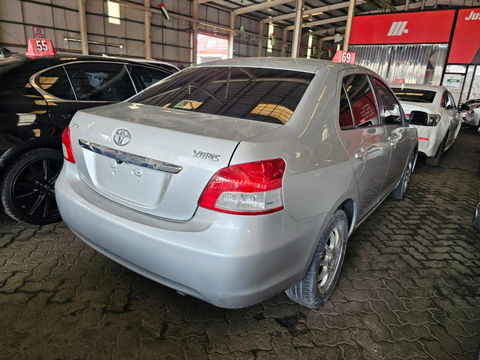
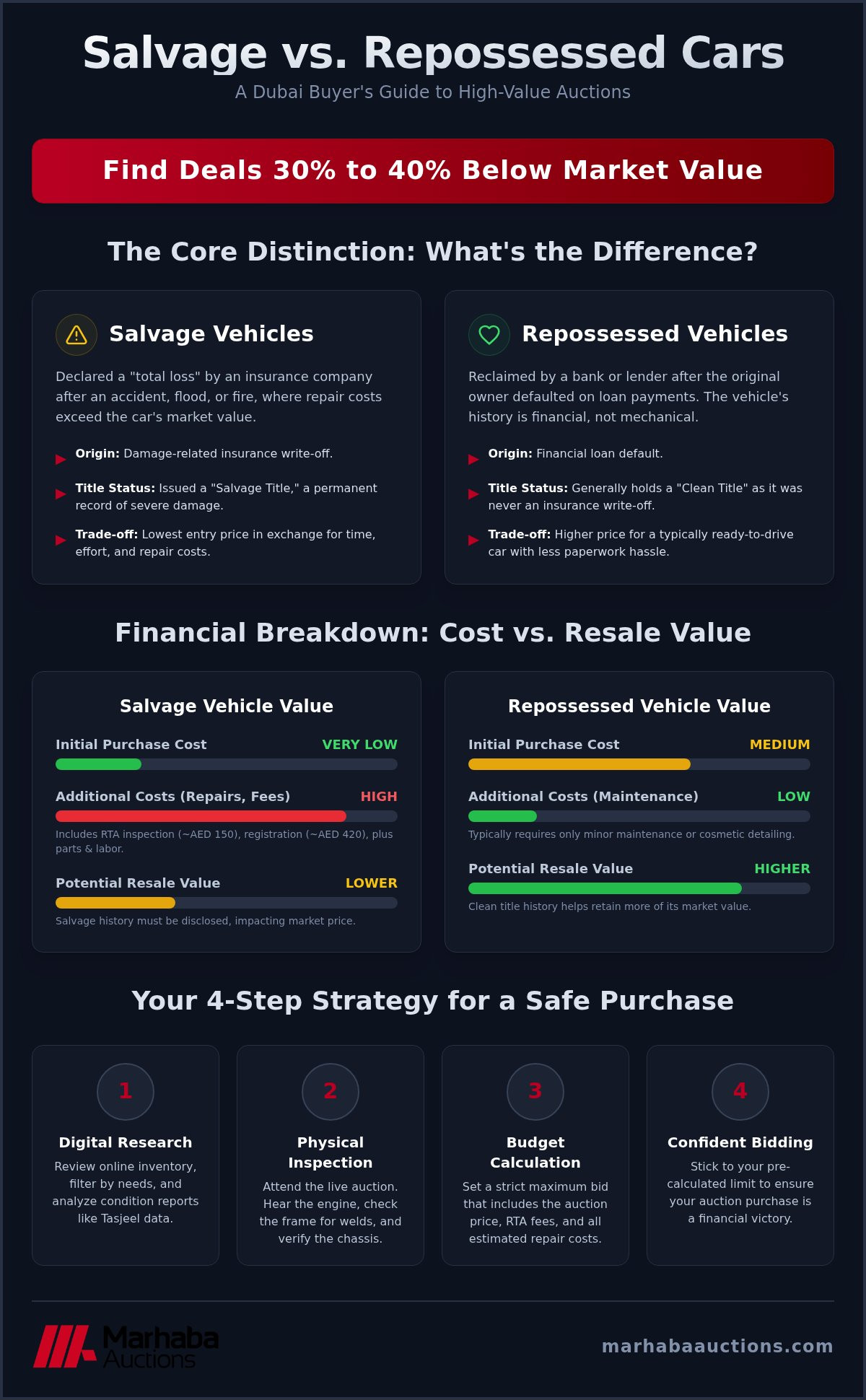
Understanding the core distinction in salvage vs repossessed cars Dubai auctions is the first step toward a high-ROI purchase. A salvage car is essentially an insurance write-off. This designation occurs when an insurance firm decides that repair costs after an accident, flood, or fire are too high relative to the vehicle's market value. While some believe these cars are only good for parts, many are repairable and can return to the road. A Salvage title serves as a permanent record of this event, which is why they carry such deep discounts.
Repossessed cars follow a financial path rather than a mechanical one. These are vehicles reclaimed by banks or lenders when a borrower defaults on their loan payments. These two categories dominate the UAE auction landscape because they allow value seekers to bypass heavy dealership markups. When analyzing salvage vs repossessed cars Dubai listings, you'll see the price gap yourself. The core trade-off is simple. With salvage, you're trading your time and repair efforts for a lower entry price. With repossessed cars, you're paying a bit more for a vehicle that's usually mechanically sound but comes with less documentation. You can browse current inventory to compare these options in real-time.
Understanding Salvage Titles and Bank Repossessions
The RTA maintains strict oversight on how salvage vehicles return to the road. Once repairs are finished, the car must pass a mandatory technical inspection to ensure it meets safety standards. If it passes, the RTA allows the title to be converted back to a standard registration. Repossessed cars generally have clean titles because they haven't been declared a total loss. The risk here is different. Since the previous owner faced financial stress, they might have skipped scheduled maintenance. You'll often find these cars are newer models with low mileage, but you should always check for a missing service book.
Comparing the Value: Costs, Repairs, and Resale Potential
The financial appeal of salvage vs repossessed cars Dubai auctions boils down to your initial investment versus your repair budget. Salvage vehicles typically sell for 30% to 40% below market value. However, this entry price doesn't include the mandatory requirements. You must account for the RTA technical inspection fee of approximately AED 150 and the registration fee of AED 420. Beyond these, parts sourcing and labor for structural or mechanical fixes can quickly eat into your profit margins if you haven't done your homework.
Repossessed cars offer a different value proposition. They are often ready-to-drive, requiring only minor maintenance or cosmetic detailing. While they cost more than salvage units, they save you the headache of long-term garage stays. Keep in mind that auction history affects future resale. In the UAE, transparency is key, and disclosing a past salvage title is a legal requirement. Repossessed cars generally retain better resale value because they hold clean titles. Understanding the Dubai Police car auction process can help you see how government-seized vehicles compare to bank repos in terms of condition and paperwork.
Assessing Repair Costs for Salvage vs. Ready-to-Drive Repos
Before you place a live bid, use a checklist to estimate your total spend. Focus on chassis integrity, airbag deployment, and engine health. If the repairs exceed 20% of the car's market value, the deal might lose its luster. For this reason, repossessed cars are often the preferred choice for first-time auction buyers. They offer a safer middle ground with fewer mechanical surprises. You can browse upcoming auctions to compare the two categories side-by-side.
How to Safely Buy Auction Cars in the UAE
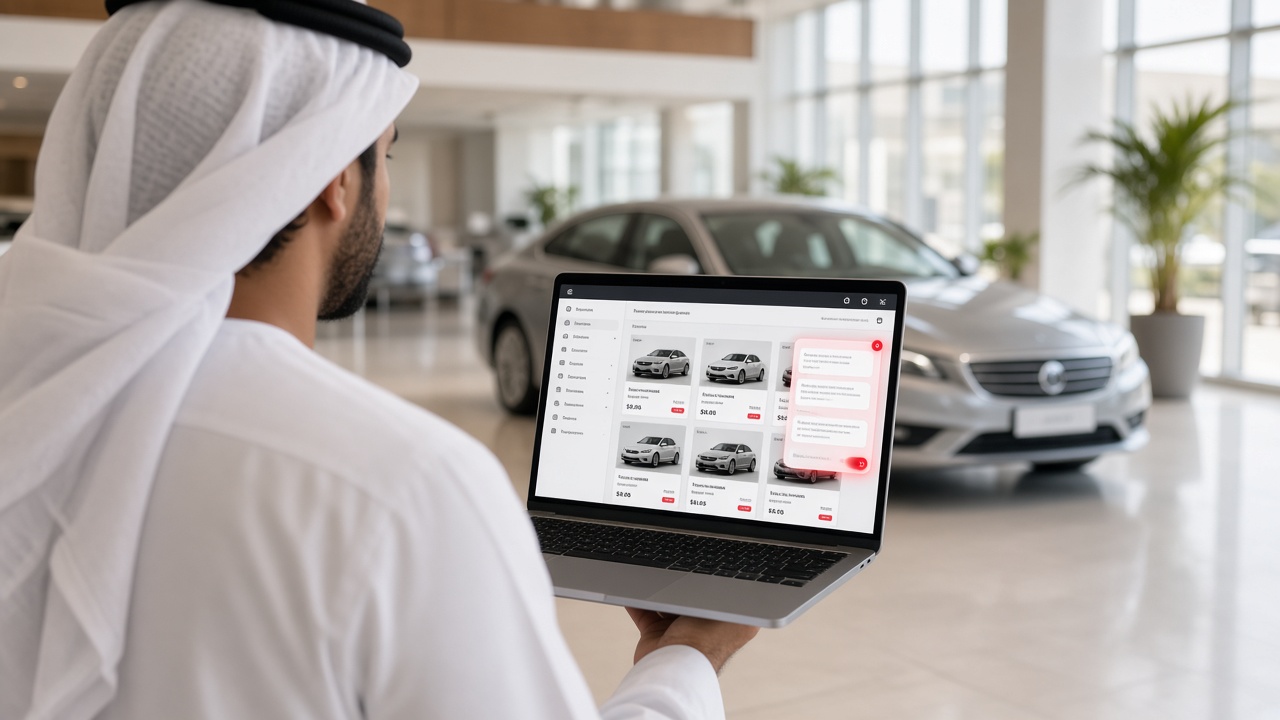
To secure the best value in the salvage vs repossessed cars Dubai market, you need a systematic approach. Your first step is to research the inventory online at Marhaba Auctions. Our digital platform allows you to filter by make, model, and year before you ever step foot on the lot. Once you've shortlisted a few vehicles, dive deep into the condition reports. We provide Tasjeel inspection data for many units, giving you an objective look at the car's health from a trusted third party.
Digital research is vital, but nothing beats the transparency of a live auction. Attending in person allows you to hear the engine run and visually inspect the chassis. This physical verification is the final layer of security before you commit. Before the bidding starts, set a strict limit based on your [VERIFY: total budget]. This figure must include the auction price, RTA registration fees, and any estimated repair costs. Sticking to this limit ensures your auction win remains a financial victory rather than a burden.
Inspecting Your Vehicle Before the Live Bid
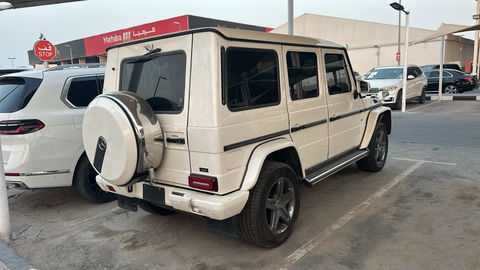
When you're at the yard, focus on high-risk areas. For salvage cars, check the frame for signs of welding or misalignment. Look at the dashboard and steering wheel for airbag deployment marks. Finally, check the ground and engine bay for fresh fluid leaks. If you're looking for higher-quality used cars Dubai buyers trust, these inspections are non-negotiable. You can also check the used car auction Sharjah calendar for upcoming repossessed stock that typically requires less mechanical work.
Start Your Bidding Journey with Confidence
Choosing between the salvage vs repossessed cars Dubai auctions offer depends entirely on your specific budget and mechanical expertise. You now understand that salvage vehicles provide the deepest discounts but require careful RTA navigation and repair management. Meanwhile, repossessed cars offer a faster path to the road with fewer documentation hurdles and cleaner titles. Both paths lead to significant savings if you prioritize physical inspections and set strict bidding limits before the hammer falls.
Marhaba Auctions makes this process seamless with live auctions 7 days a week and full national UAE coverage. We provide the transparency you need to secure vehicles at 30% to 40% below market prices. Don't let the best deals pass you by. It's time to take control of your next vehicle purchase with a partner you can trust. Browse our upcoming live auction calendar and find your next deal today. Your perfect car is waiting for the right bid.
Frequently Asked Questions
Can I register a salvage car in the UAE after it is repaired?
Yes, you can register a salvage car once it passes a mandatory RTA technical inspection. This process ensures the vehicle is roadworthy and meets all UAE safety standards. You'll need to pay the technical inspection fee of approximately AED 150 and a registration fee of AED 420. Once these steps are complete, the RTA converts the title, allowing you to legally drive the vehicle.
Are repossessed cars in better condition than salvage cars?
Generally, repossessed cars are in better mechanical condition because they haven't been declared a total loss by insurance companies. Most hold a clean title, meaning they weren't involved in major accidents or floods. While they might require minor cosmetic work or a routine service, they don't carry the structural risks often found when comparing salvage vs repossessed cars Dubai auctions offer to the public.
Do I need a special license to bid on salvage vehicles at a live auction?
You don't need a special dealer license to bid on salvage or repossessed vehicles at our live auctions. The process is open to both UAE nationals and expats. You simply need to register and provide a security deposit, which is typically 20% of your intended bidding limit. This accessibility makes it easy for individual buyers to find high-value deals without professional credentials.
How much can I actually save by buying a repossessed car vs a dealer?
Buyers typically save between 30% and 40% compared to traditional dealer prices. Because auctions bypass the overhead costs of showrooms and sales commissions, you're paying a price much closer to the vehicle's actual wholesale value. These savings are especially significant for late-model SUVs and luxury vehicles, which make up a large portion of the current repossessed car inventory in the UAE.
Can I register a salvage car in the UAE after it is repaired?
Yes, you can register a salvage car once it passes a mandatory RTA technical inspection. This process ensures the vehicle is roadworthy and meets all UAE safety standards. You'll need to pay the technical inspection fee of approximately AED 150 and a registration fee of AED 420. Once these steps are complete, the RTA converts the title, allowing you to legally drive the vehicle.
Are repossessed cars in better condition than salvage cars?
Generally, repossessed cars are in better mechanical condition because they haven't been declared a total loss by insurance companies. Most hold a clean title, meaning they weren't involved in major accidents or floods. While they might require minor cosmetic work or a routine service, they don't carry the structural risks often found when comparing salvage vs repossessed cars Dubai auctions offer to the public.
Do I need a special license to bid on salvage vehicles at a live auction?
You don't need a special dealer license to bid on salvage or repossessed vehicles at our live auctions. The process is open to both UAE nationals and expats. You simply need to register and provide a security deposit, which is typically 20% of your intended bidding limit. This accessibility makes it easy for individual buyers to find high-value deals without professional credentials.
How much can I actually save by buying a repossessed car vs a dealer?
Buyers typically save between 30% and 40% compared to traditional dealer prices. Because auctions bypass the overhead costs of showrooms and sales commissions, you're paying a price much closer to the vehicle's actual wholesale value. These savings are especially significant for late-model SUVs and luxury vehicles, which make up a large portion of the current repossessed car inventory in the UAE.